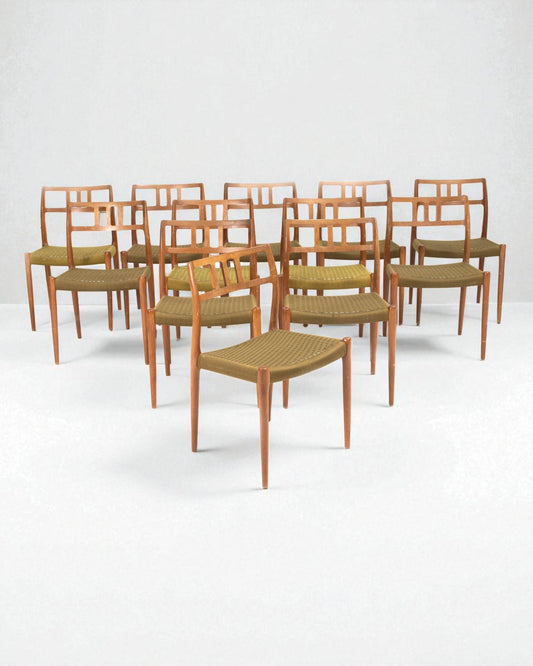
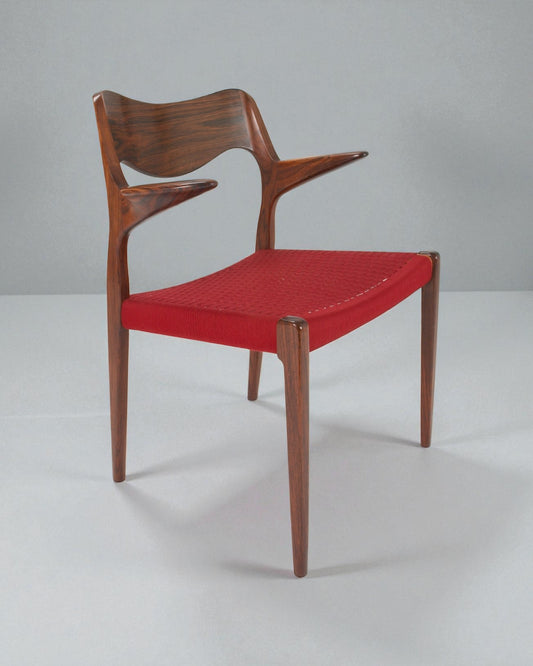
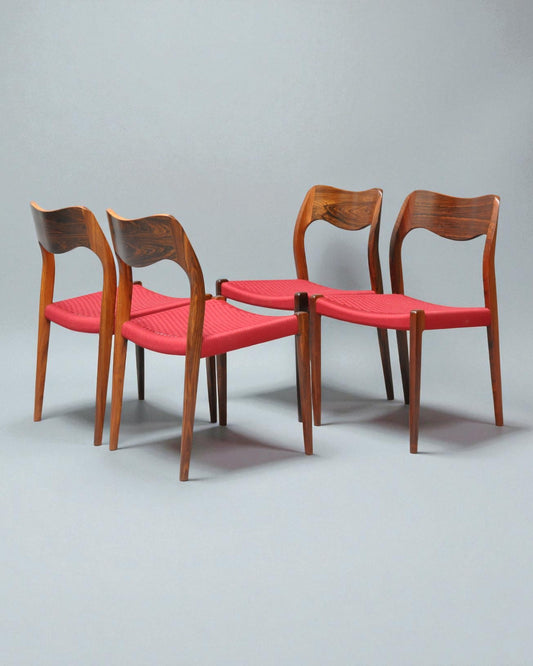
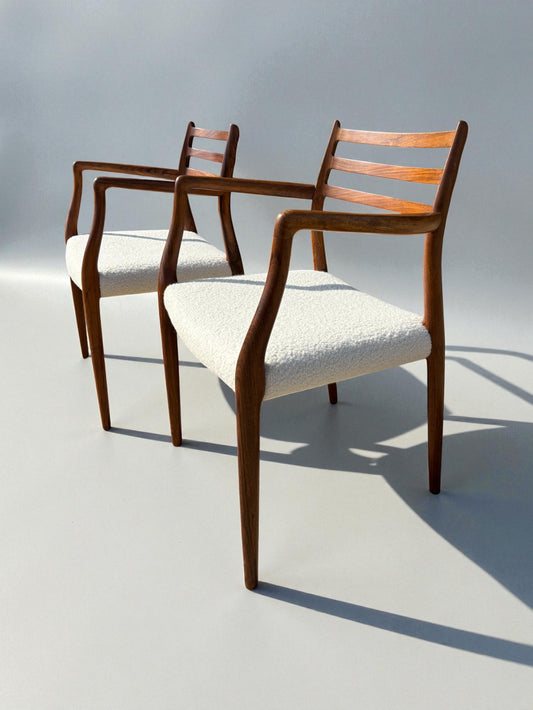
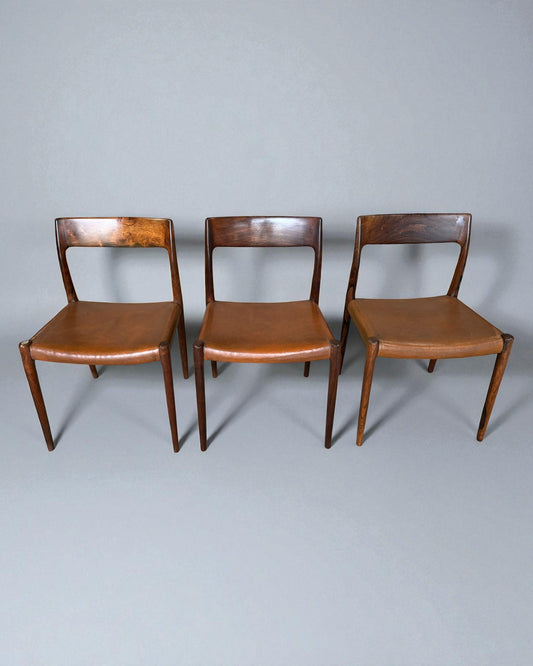
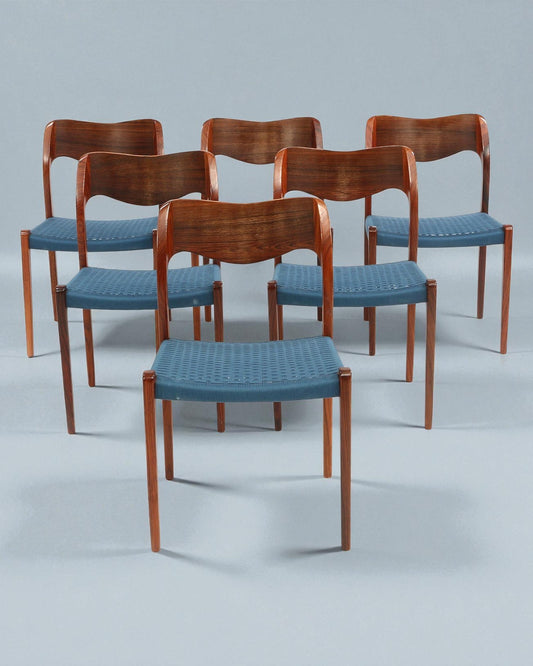
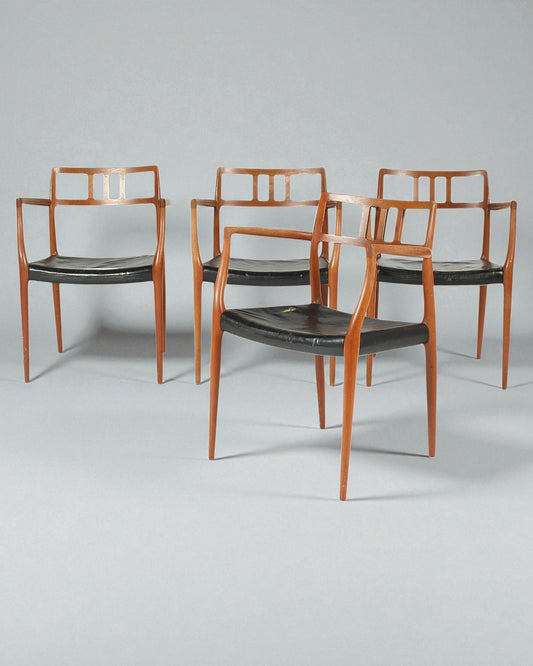
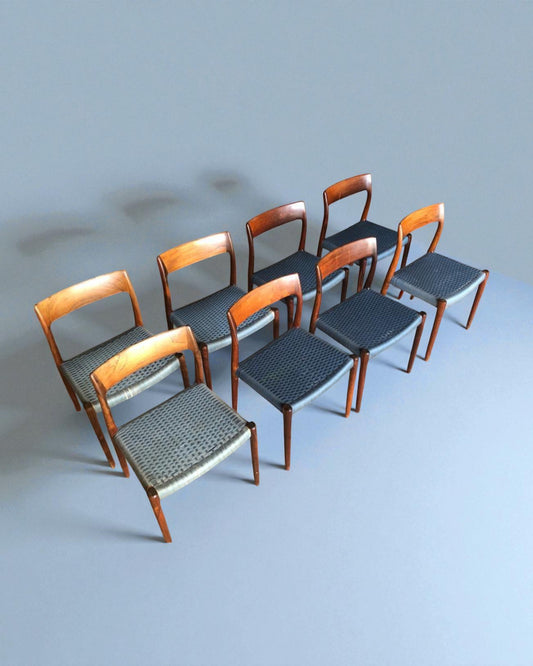
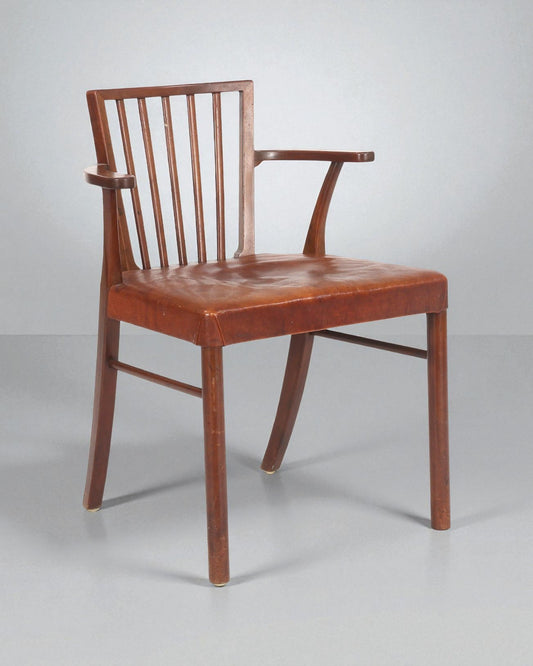
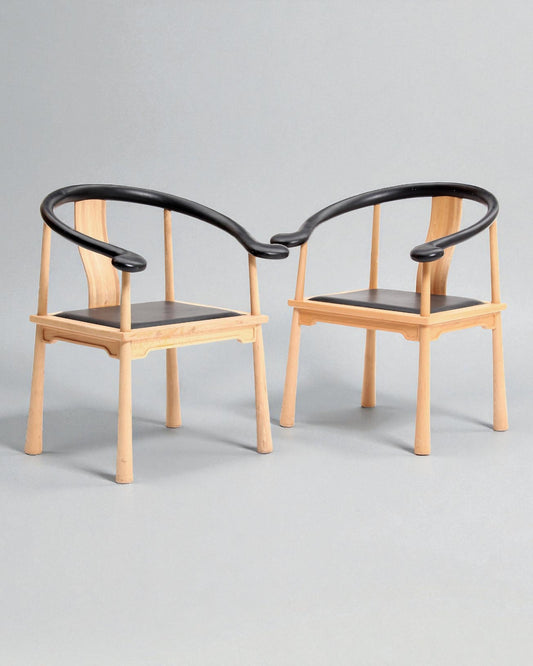
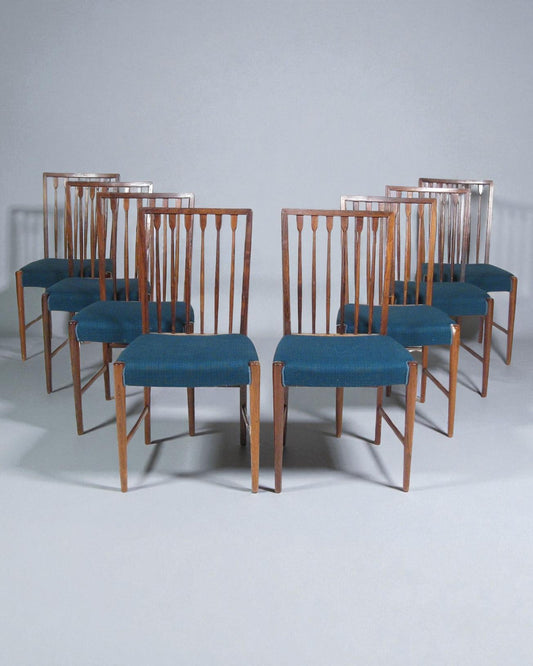
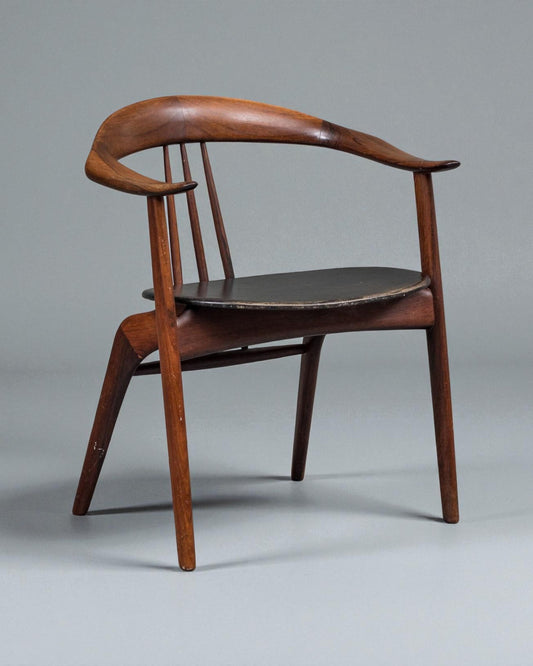
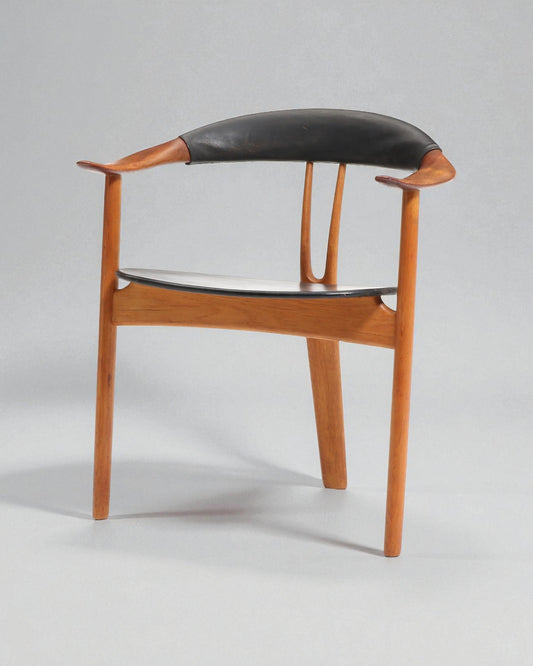
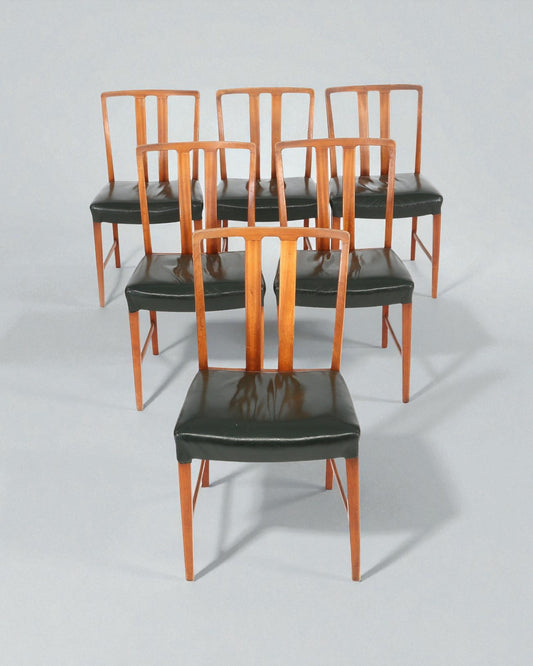
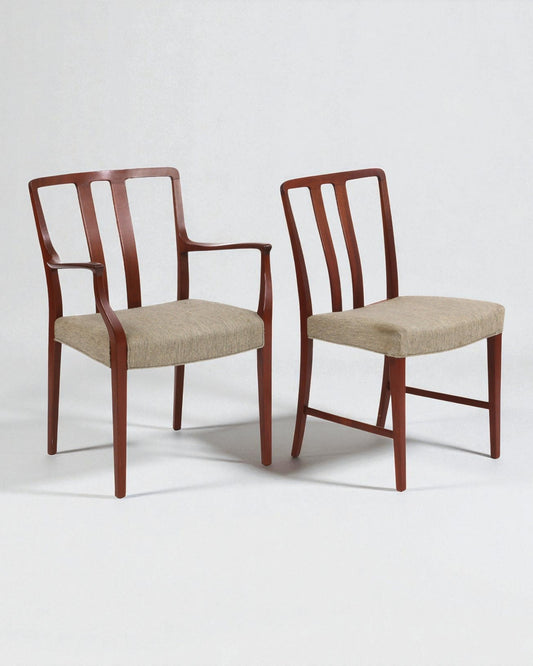
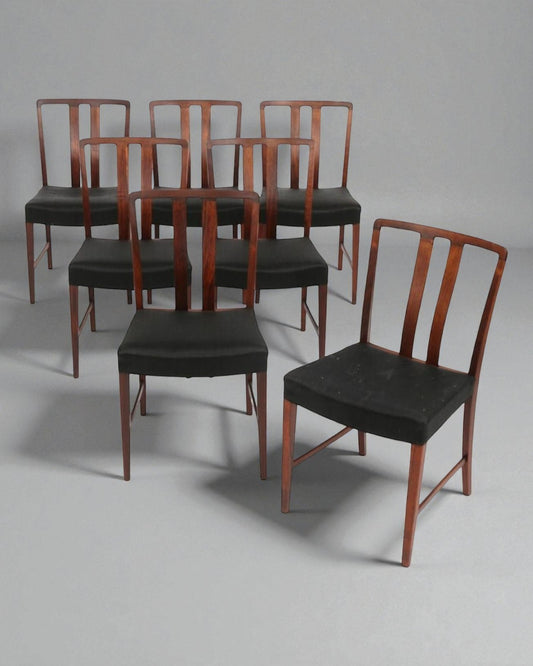
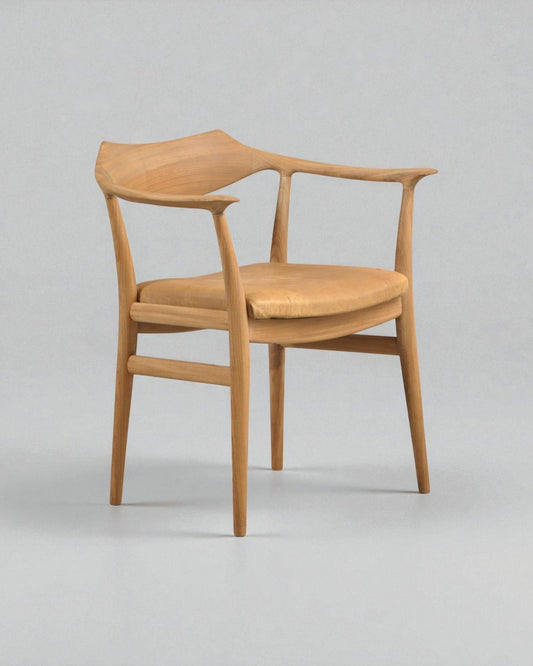
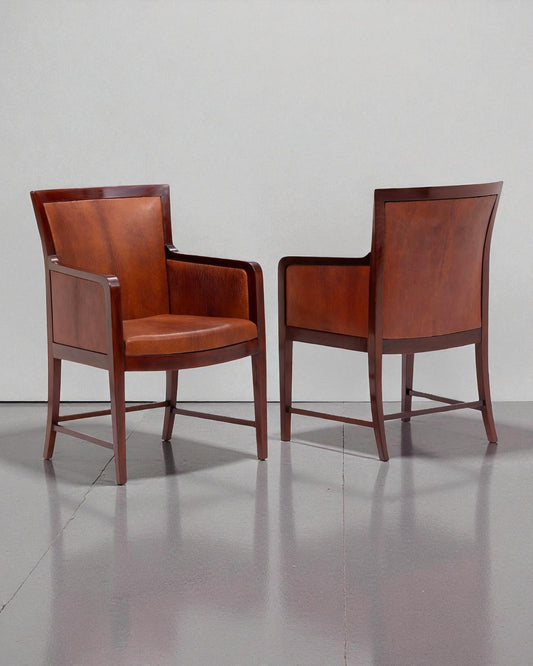
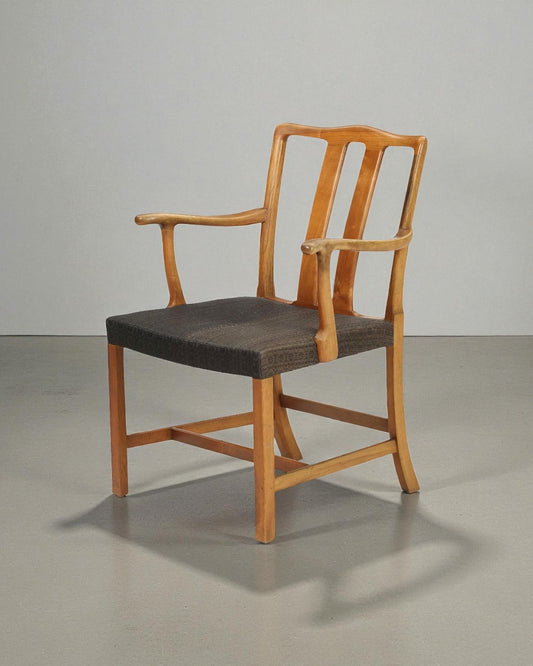
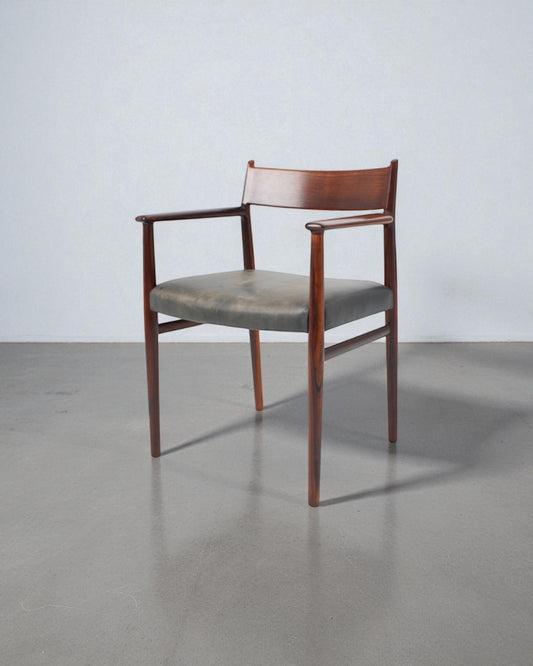
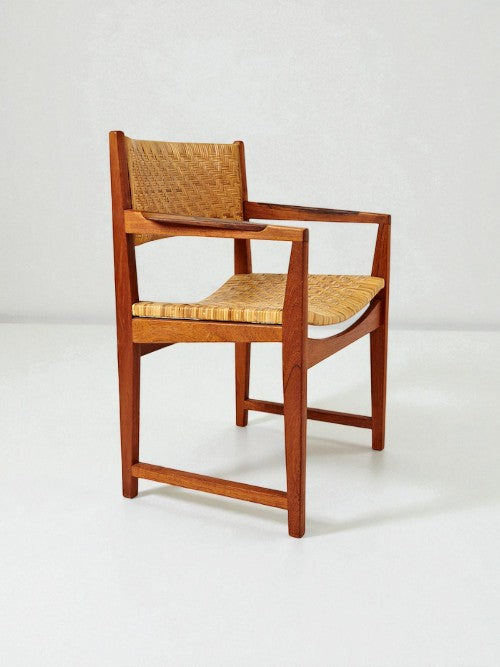
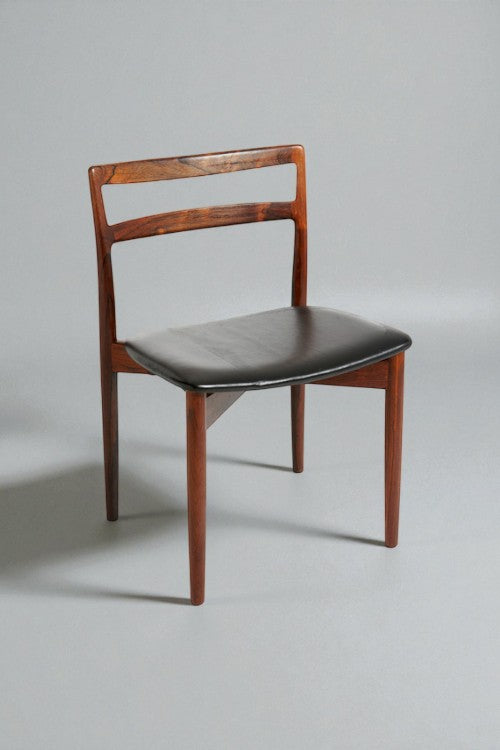
Our collection spans the golden years of Danish furniture making, roughly 1944–1969, when small workshops and visionary architects turned solid wood into fluid, three-dimensional forms that still feel modern today
Whether you’re building a complete dining set, hunting for a pair of statement carvers, or searching for a single standout chair for a desk or corner, every piece we offer has been chosen for its authenticity, craftsmanship and long-term value.
The Paere Dansk Ethos
At Paere Dansk, we think of our chairs as investable design with history and a long-lasting futureWe focus on original Danish vintage rather than reproductions.
· We work almost exclusively with solid woods – particularly Brazilian rosewood, teak, oak and beech – and with the cabinetmakers and upholsterers who understand how to bring them back to life.
· Our restoration approach is conservative: we revive pieces so they can be used every day, while preserving patina, tool marks and tiny traces of their past.
“Design doesn’t discriminate” is a key part of our philosophy: we love working on projects small and large, from a single chair in a home office to full seating schemes for restaurants, hotels and creative studios.
Why Vintage Danish Dining Chairs Are So Special
1. Craftsmanship You Can Feel
Mid-century Danish dining chairs were typically made in solid hardwoods – often hand-finished, hand-joined and, in many cases, hand-woven. The quality is in the details:
· Mortise-and-tenon and dowelled joins that flex with use instead of loosening.
· Sculpted backrests and arms shaped for the natural curve of the spine.
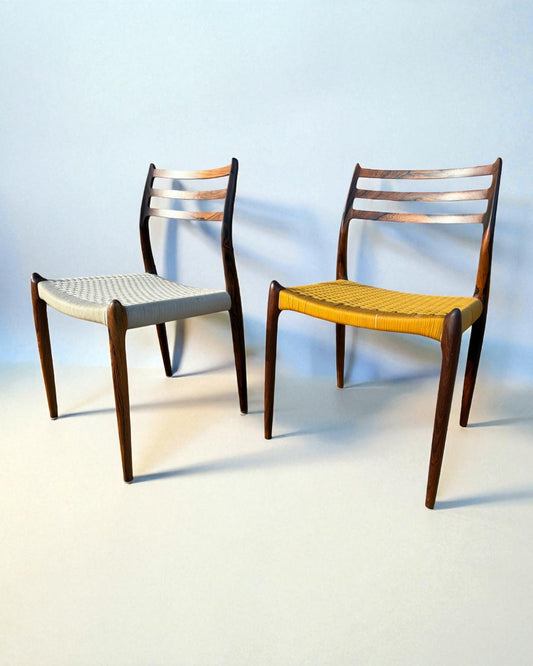
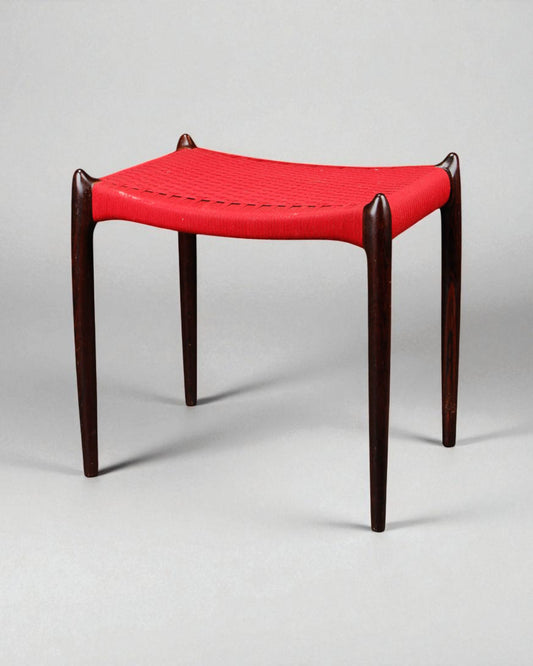
· Hand-woven paper cord seats that cradle the sitter and distribute weight evenly.
The oldest Scandinavian paper-cord chairs date from the late 1940s and early 1950s – and many of those seats are still in service today, a testament to the material and the technique.
2. The Rosewood Story – A Vanishing Resource
Paere Dansk is recognised for its expertise in rosewood dining chairs. Many of the chairs we hold were made before 1970 using Brazilian rosewood (Dalbergia nigra) – the “black” rosewood famous for its inky grain and depth of colour
Around 1970, Danish timber agents stopped importing Brazilian rosewood, switching to other species as supplies dwindled and environmental protections came into force. Today, Brazilian rosewood is strictly controlled under CITES; furniture made from it before those restrictions is increasingly rare and highly collectible.
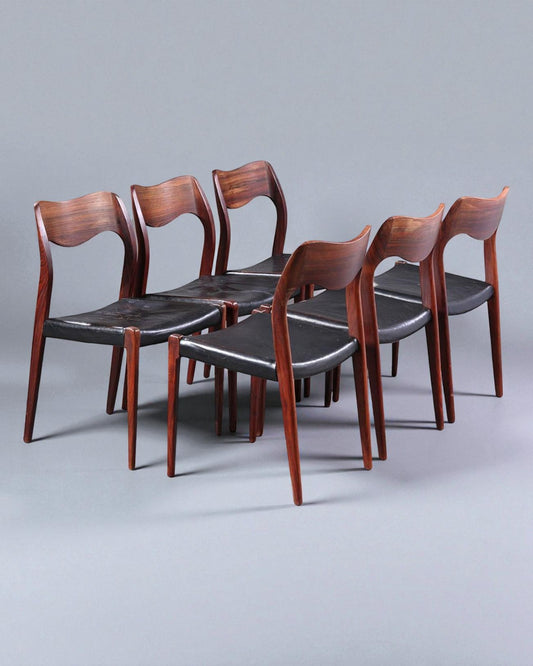
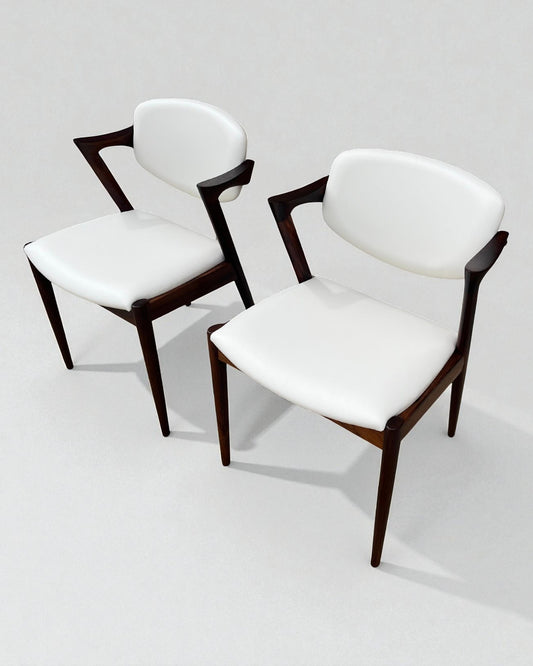
That’s why pre-1970 rosewood dining chairs by designers such as Kai Kristiansen and Niels Otto Møller have become sought-after heirlooms – they combine sculptural design, exceptional craft and a timber that simply can’t be sourced in the same way again.
3. Ergonomic Design, Decades Before “Ergonomics” Was a Buzzword
From the late 1940s onwards, Danish designers were quietly revolutionising how a dining chair should support the body.
· Hans J. Wegner’s CH24 “Wishbone” chair (1949) introduced a steam-bent, wrap-around back and a hand-woven paper-cord seat, and has remained in continuous production ever since – it’s even disproportionately popular in Japan, where it has its own dedicated book.
· Hans Wegner and his contemporaries pioneered woven Danish cord, paper cord and cane seats to create chairs that were flexible, breathable and long-lasting – designs that are still being restored and re-woven today.
· Børge Mogensen’s J39 “People’s Chair” (1947) used a simple beech frame and paper-cord seat to deliver honest, affordable quality; new examples are still produced and remain a benchmark for functional design. When you sit in a good vintage Danish dining chair, you’re feeling the benefit of decades of experimentation in form and comfort – not just style.
4. Sustainability & Long-Term Value
Choosing vintage furniture is one of the most sustainable ways to furnish a home. You’re re-using existing materials, avoiding new resource extraction, and supporting skilled restoration work rather than mass production.
Because many of our chairs are by named designers and made in rare timbers such as Brazilian rosewood, they also have real collectible value. Well-chosen pieces often hold or increase their value over time, even while they’re in everyday use at your dining table.
Designers & Cabinetmakers You’ll Find at Paere Dansk
Our Vintage Dining Chairs collection is anchored by works from some of Denmark’s most influential designers and cabinetmakers, including:
· Niels Otto Møller – celebrated for his sculpted frames and legendary paper-cord seats. Paere Dansk holds multiple rosewood Møller dining chairs from 1958 and 1962, made before 1970, when the last Brazilian rosewood was imported into Denmark.
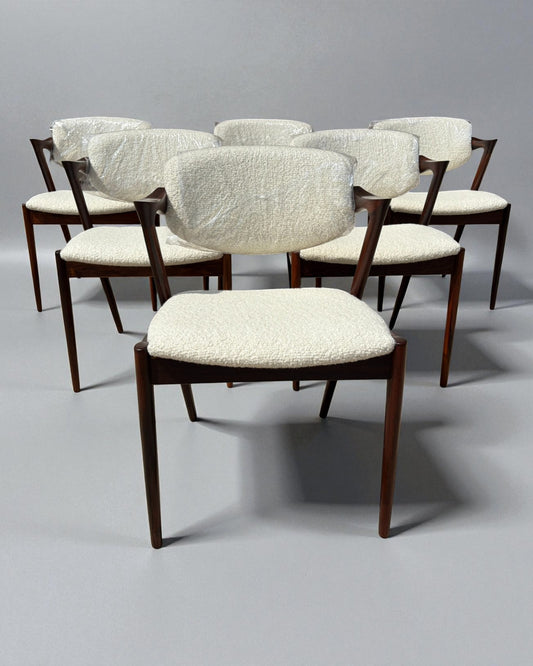
· Kai Kristiansen – known for his angular silhouettes and ingenious pivoting backs. We stock vintage rosewood dining chairs designed by Kristiansen in the early 1960s, again made before the switch away from Brazilian rosewood.
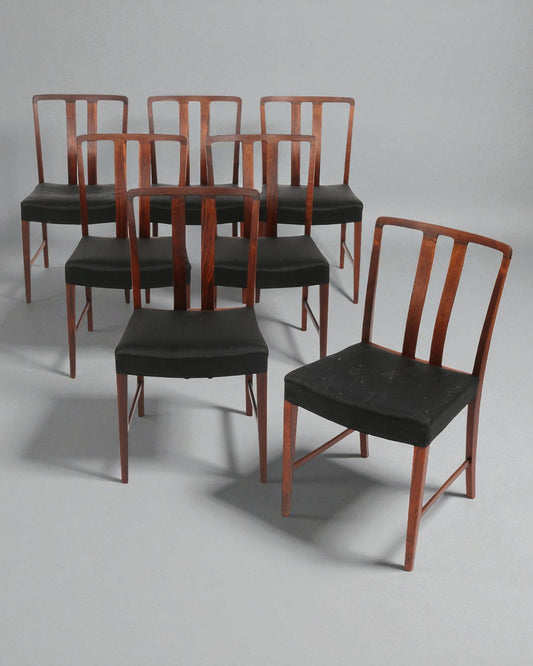
· Arne Hovmand-Olsen – a master of slender, organic lines; his dining chairs bring lightness and elegance to a room without sacrificing comfort
· Johannes Andersen – famous for sculptural tables and chairs; his work pairs beautifully with our rosewood and teak dining tables.
· Hans J. Wegner – the “master of the chair”, whose woven-seat and solid-wood designs defined Danish modernism and continue to inspire new generations.
· Børge Mogensen – the people’s designer, obsessed with usability and honesty; his approach to functional, accessible furniture underpins much of what we admire in Danish design today.
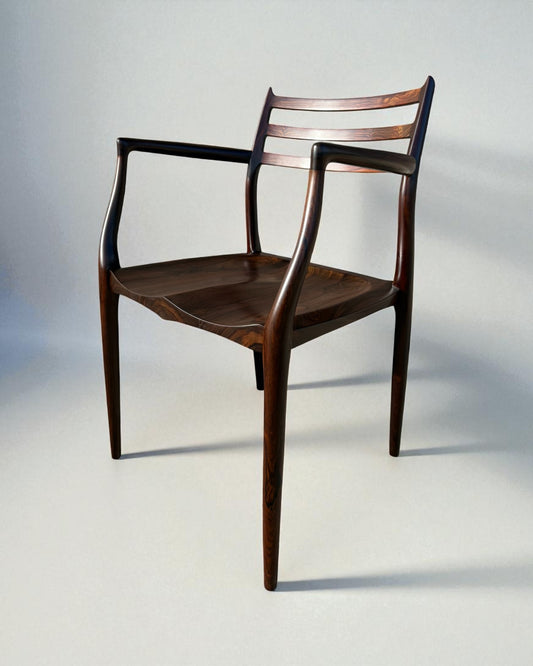
· Niels Kofoed – designer of our rosewood spindle-back carvers with distinctive teardrop spindles and armrests, ideal as end chairs for a table or as statement desk chairs
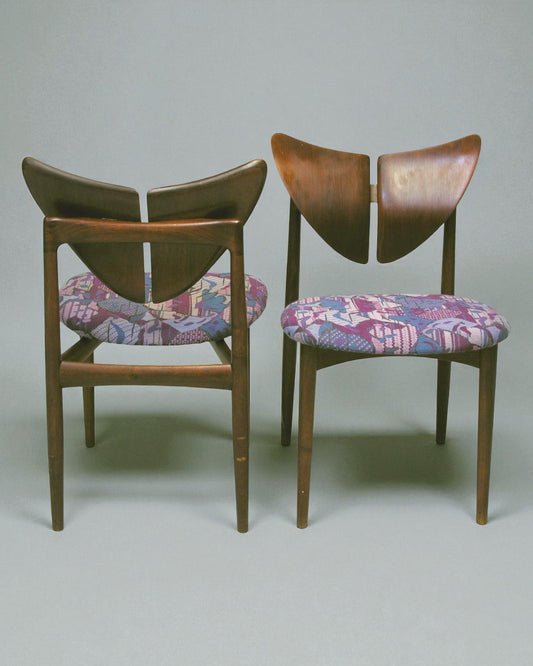
· Harry Østergaard, Peder Pedersen and other Danish cabinetmakers – whose mid-century rosewood and teak dining chairs showcase the quality of smaller workshops operating alongside the big-name brands. The result is a collection that balances iconic design names with rarer workshop pieces, all unified by material quality and craft.
What You’ll Find in Our Vintage Dining Chairs Collection
Within this collection you’ll discover:
Rosewood Dining Chairs
Our speciality. Many of these chairs use pre-1970 Brazilian rosewood with striking dark figuring and near-black grain when restored – a look that simply can’t be replicated with modern substitutes.
Expect elegant armchairs and side chairs by the likes of Kristiansen, Møller, Kofoed, Ostergaard, Pedersen and others, often offered as complete sets with optional re-upholstery in leather, wool or bouclé.
Teak, Oak & Beech Dining Chairs
Not every room calls for the drama of rosewood. Our teak, oak and beech chairs offer lighter, softer tones while retaining the same commitment to construction and detail. These woods were mainstays of Danish mid-century production and pair beautifully with both vintage and contemporary tables
Paper-Cord & Woven-Seat Chairs
Many of our chairs feature hand-woven paper cord or Danish cord seats, a mid-century innovation that offered a smoother, more comfortable alternative to rush or cane. Our restoration team can re-weave seats using traditional techniques if you fall for a frame that needs a little structural TLC.
Single Chairs, Pairs & Full Sets
We stock:
· Single chairs – perfect for desks, bedrooms or as accent seating.
· Pairs and odd numbers – ideal when you want to mix styles around a table.
· Complete sets – including large runs of matching rosewood or teak dining chairs for bigger projects. If you discover a design you love but need additional seats, we’re often able to help you source matching or sympathetic companion chairs.
How to Choose the Right Vintage Dining Chairs
1. Start with Material & Finish
· Rosewood for drama, depth and collectible value.
· Teak for warmth and mid-tone richness.
· Oak and beech for a lighter, more Scandinavian feel.
Think about how the grain and colour will interact with your table, flooring and other timber pieces in the room.
2. Consider Comfort & Use
Ask yourself:
· How long do you typically sit at the table?
· Do you prefer a soft upholstered seat or the springy support of paper cord?
· Would armrests enhance comfort – for example, on end chairs – or feel too bulky in a compact space?
Many of our chairs can be re-upholstered in your preferred fabric or leather, or supplied with freshly woven seats, so you can dial in the exact level of comfort and practicality you need.
3. Check Proportions
Vintage chairs don’t always follow modern standard dimensions. We recommend:
· Checking seat height against your table top.
· Measuring width and depth to ensure enough breathing space between chairs.
· Thinking about back height – higher backs can feel more formal; lower backs keep sightlines open in smaller rooms.
If you’re unsure, we’re happy to talk through measurements and suggest models that will work with your existing table.
4. Decide on Matching vs Mixed
A matching set creates a calm, architectural backdrop for tableware and artwork. A curated mix – for example, four similar side chairs with a pair of distinctive rosewood carvers – can feel more relaxed and personal. Both approaches can work beautifully; it comes down to how you use the space and how you like it to feel.
Styling Ideas for Vintage Dining Chairs
· Modern table, vintage chairs
Pair a slim, contemporary dining table with sculptural mid-century chairs to soften sharp lines and introduce warmth.
· Tone-on-tone
Match the warmth of teak or rosewood chairs with similarly toned flooring or wood panelling for a cocooning, club-like feel.
· Mixed upholstery
Use upholstery to subtly differentiate chairs – for instance, leather on carvers at the ends of the table and wool or bouclé on side chairs. With rosewood frames, a contrasting fabric can highlight the grain even more.
· Beyond the dining room
Vintage dining chairs also make excellent hallway seats, bedroom chairs or desk companions – especially spindle-back and carver styles that look good from every angle.
Restoration, Care & Longevity
Every piece that comes into Paere Dansk is carefully inspected. Where necessary we:
· Tighten or rebuild joints.
· Clean and refinish wood using sympathetic oils and polishes.
· Re-weave cord seats or re-upholster cushions using high-quality fillings and fabrics.
To look after your chairs at home:
· Dust regularly with a soft cloth.
· Avoid harsh cleaners; use products appropriate for oiled or lacquered wood.
· Keep cord and woven seats dry and avoid dragging chairs across rough floors.
Handled with basic care, a good Danish dining chair will easily see another 50–70 years of use – that’s the beauty of solid wood and traditional joinery.
Frequently Asked Questions
Are vintage dining chairs comfortable enough for everyday family life?
Yes. The designers we champion – from Møller and Kristiansen to Wegner and Mogensen – were obsessed with everyday comfort. Many of their chairs were originally designed for homes, schools and public buildings, so they’re built for real use, not just show.
Is it safe to buy vintage furniture online?
With Paere Dansk, you receive detailed photographs, honest condition reports, precise measurements and clear notes on any restoration. We encourage you to contact us if you need additional images or guidance on how a particular model will work in your space.
What makes rosewood dining chairs so desirable?
Pre-1970 Brazilian rosewood is structurally strong, visually dramatic and now heavily protected – making surviving chairs both beautiful and comparatively scarce. When combined with good design and careful restoration, rosewood dining chairs become functional pieces of design history.
Can you restore or re-upholster a chair I fall in love with?
Yes. If you find a vintage dining chair at Paere Dansk that needs some TLC, our cabinetmakers and upholsterers can re-weave, re-finish or re-upholster it to suit your project, while respecting the original design.
Start Your Vintage Dining Chair Journey
Whether you’re a seasoned collector or just beginning to explore mid-century design, Paere Dansk offers a considered, expertly curated selection of vintage Danish dining chairs – with a special emphasis on rare rosewood pieces made before 1970.
Browse the collection, compare designers, and let each chair’s story guide you. When you’re ready, we’re here to help with measurements, restoration options and design advice for homes, studios and commercial spaces alike.
Paere Dansk – exceptional vintage Danish dining chairs, crafted in the past, restored for the future.